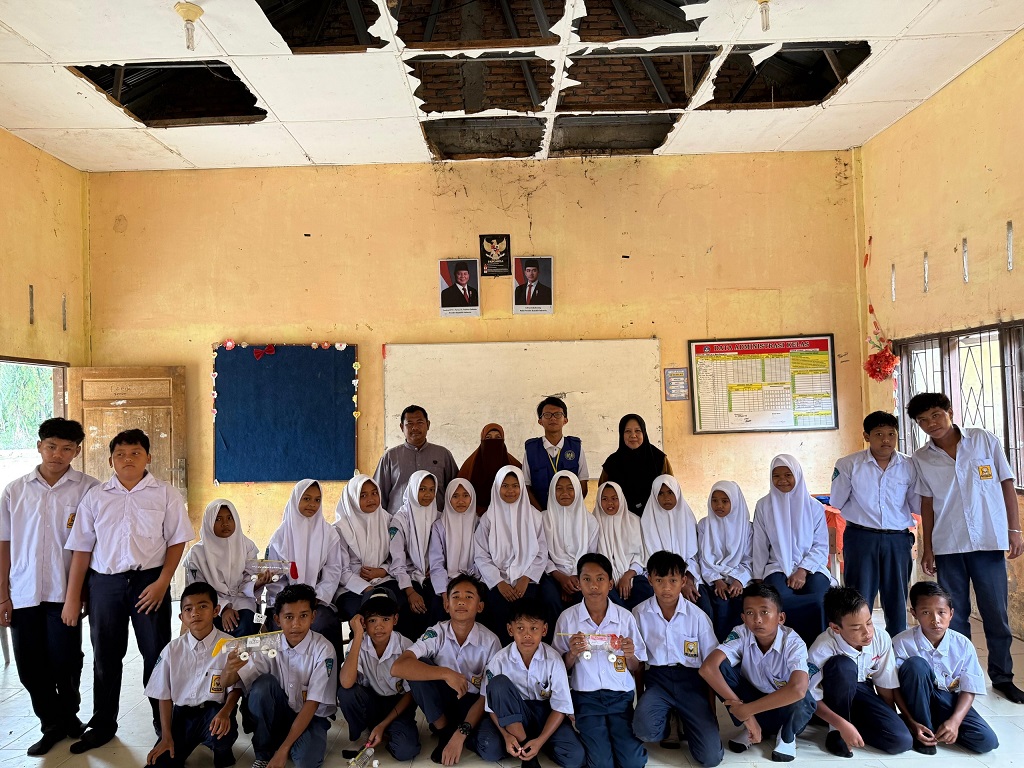




Efforts to provide education and psychological recovery for students affected by flooding in Aceh Tamiang Regency were carried out through a Collaborative Humanitarian Community Service Program (KKN). One of the initiatives was led by Khotibul Hanif, a student of Electrical Engineering Education at the Faculty of Engineering, Universitas Negeri Yogyakarta, at SMP Negeri 5 Bendahara in Rantau Pakam Village, Bendahara District. Using an interactive learning approach, students were encouraged to understand scientific concepts while rebuilding their learning motivation following the flood disaster that previously affected the area.
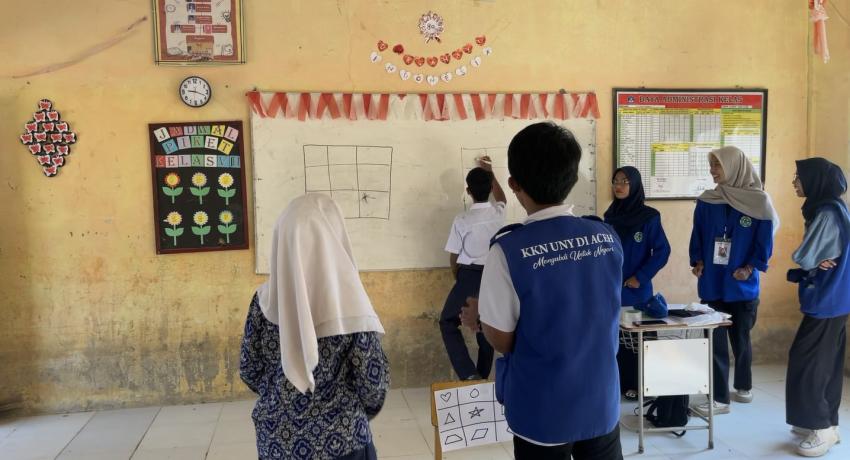
The program was implemented across several grade levels using different approaches. In Grade VII, activities focused on practice-based science learning integrated with trauma healing. Meanwhile, in Grades VIII and IX, the program emphasized psychological recovery through sharing sessions, group games, and motivational support to help students remain enthusiastic about continuing their education after the disaster.
In Grade VII science classes, students conducted a hands-on project by creating wind-powered cars from used bottles, using balloons as a source of air propulsion. This simple experiment demonstrated the conversion of air energy into kinetic energy. Through this practical method, students not only gained a direct understanding of physics concepts but also learned teamwork and rebuilt a positive and enjoyable learning atmosphere.
For Grades VIII and IX, activities began with educational ice-breaking sessions to reestablish a positive and interactive classroom environment. This was followed by collaborative games designed to enhance communication skills, self-confidence, and peer solidarity. The sessions concluded with motivational talks aimed at encouraging students to stay optimistic and focused on achieving their goals despite the challenges following the disaster.
Khotibul Hanif, the program coordinator, explained that the working principle of the simple car is related to wind power generation technology, where wind energy is used to rotate turbines and produce electricity through electromagnetic induction. He emphasized that the program aims not only to improve science and technology literacy but also to help students regain confidence and rebuild their learning spirit after experiencing a disaster.
Sa’adah, a science teacher at SMP Negeri 5 Bendahara, expressed appreciation for the initiative. She noted that the combination of hands-on science learning and psychological support provided a more contextual learning experience while also helping students feel emotionally supported during the recovery period.
The program aligns with the Sustainable Development Goals (SDGs), particularly Goal 4 on Quality Education and Goal 7 on Affordable and Clean Energy. Through this educational and humanitarian initiative, students are expected to contribute to improving technological literacy while creating a tangible social impact, especially in the Aceh Tamiang region.
This initiative is expected to help rebuild a positive and supportive learning environment within the school. The integration of science education and psychological assistance serves as a concrete step in helping students recover from the difficult circumstances caused by the disaster, while fostering optimism and stronger self-confidence for the future.