



The UNY Students have developed an innovation in the livestock sector by conducting hands-on training in the production of eco-friendly fermented animal feed at the university’s Livestock Laboratory. The activity served as an applied learning platform, introducing students to feed-processing technology based on natural materials and resource efficiency.
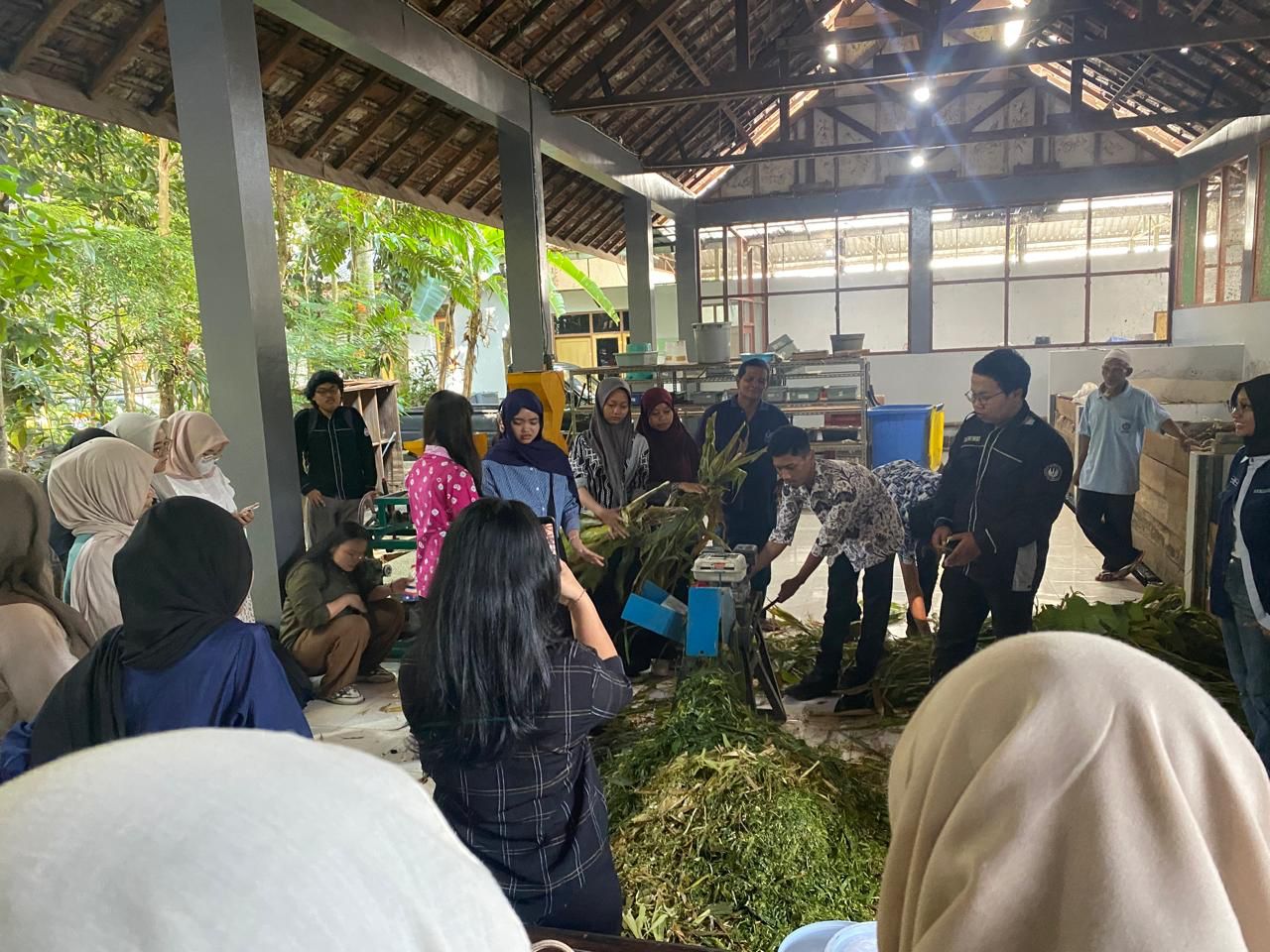
During the practice session, students directly produced silage—or fermented feed—through several stages, including material chopping, preparation of fermentation solutions, and storage under anaerobic conditions. The fermentation process utilized Effective Microorganisms (EM4) and molasses as natural activators to accelerate fermentation without reducing the nutritional value of the raw materials.
The main ingredients included young corn plants, sugarcane bagasse, and elephant grass. After being chopped using a feed chopper, the materials were thoroughly mixed with the fermentation solution and tightly sealed to prevent air exposure. Within approximately two weeks, the mixture transforms into fermented feed that is more durable, easier to digest, and has a distinctive aroma favored by livestock such as cattle and goats.
The activity supervisor, Ir. Suhandoyo, M.S., explained that the program was designed to provide students with direct experience in processing local materials into high-value products.
“The production of fermented feed not only enhances students’ technical skills, but also builds awareness of the importance of resource efficiency and sustainable agricultural waste management,” Suhandoyo said. “We want students to understand that simple innovations like this can offer practical solutions to support livestock feed self-sufficiency at the community level.”
This practical training also reflects UNY’s commitment to the green campus principle and its contribution to the Sustainable Development Goals (SDGs), particularly SDG 2 (Zero Hunger), SDG 12 (Responsible Consumption and Production), and SDG 15 (Life on Land).
At the end of the activity, students participated in a reflection session with the supervising lecturer to share ideas and observations. Several students even proposed developing alternative fermented feeds using other local materials, such as rice straw and cassava leaves.
Through initiatives like this, UNY continues to foster graduates who are innovative, environmentally conscious, and capable of contributing to the advancement of sustainable agriculture and livestock development in Indonesia.