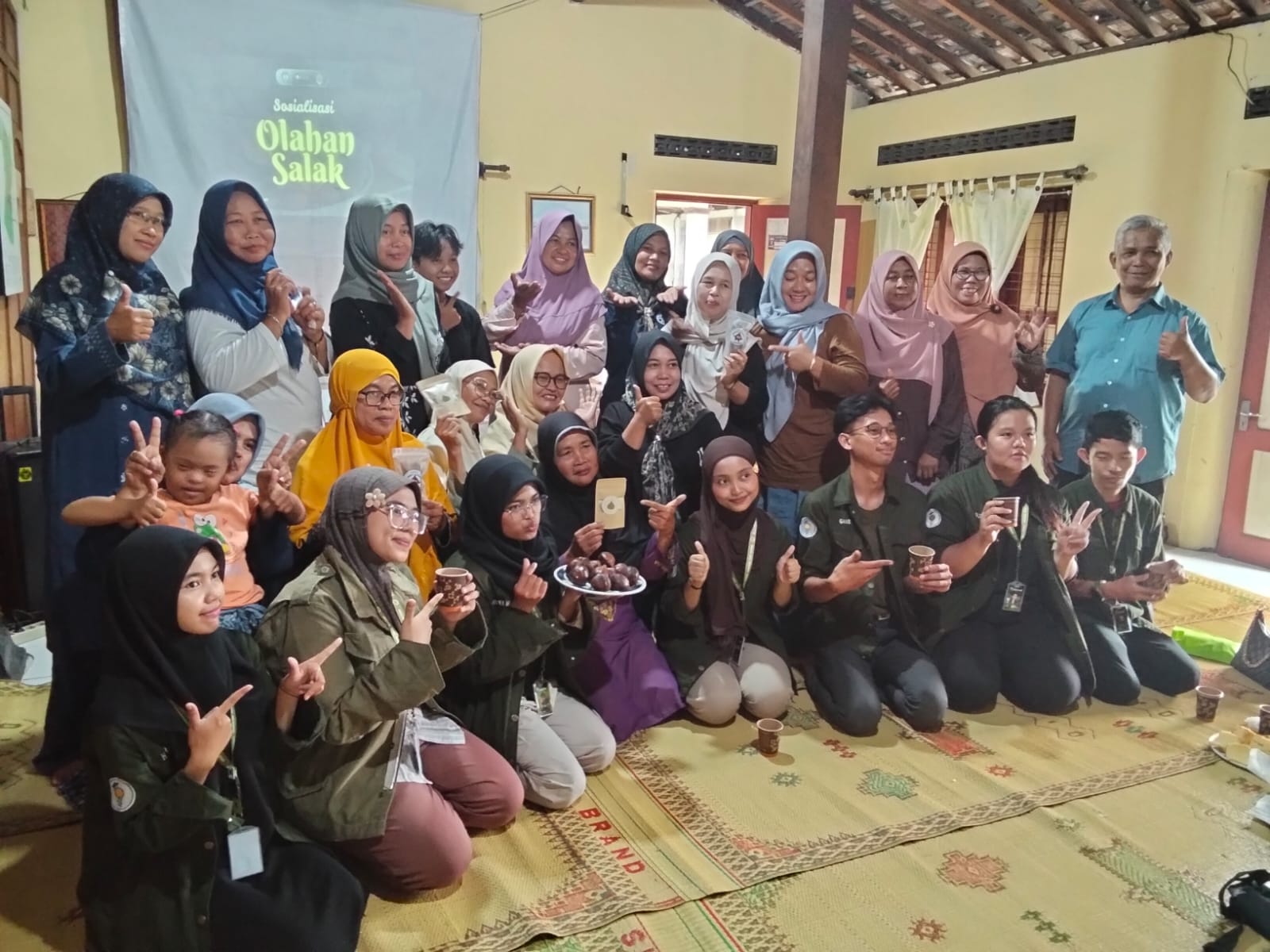




Students of the Off-Campus Learning Program (PLK) at Universitas Negeri Yogyakarta (UNY) conducted a community empowerment program through training on salak peel processing in Watuadeg Hamlet, Purwobinangun Village, Pakem District, Sleman Regency, on Saturday (16/5/26). In this activity, residents were introduced to the utilization of salak peel waste as a herbal beverage with added economic value and health benefits.
The program was initiated by a team of UNY PLK students consisting of Nirmala Aurelia, Chesna Ganendra Putra Wibowo, Widya Puspita Dewi, Arsya Khalid Mahardika, Fyinn Lika Ambitha, Hasna Izza Luthfia, Ananta Feiza Nery Widowati, Nabila Ilma Yenisa, and Nanda Olivia Pandjaitan. The initiative formed part of the students’ efforts to assist the community in developing local potential based on Pakem’s distinctive agricultural products.
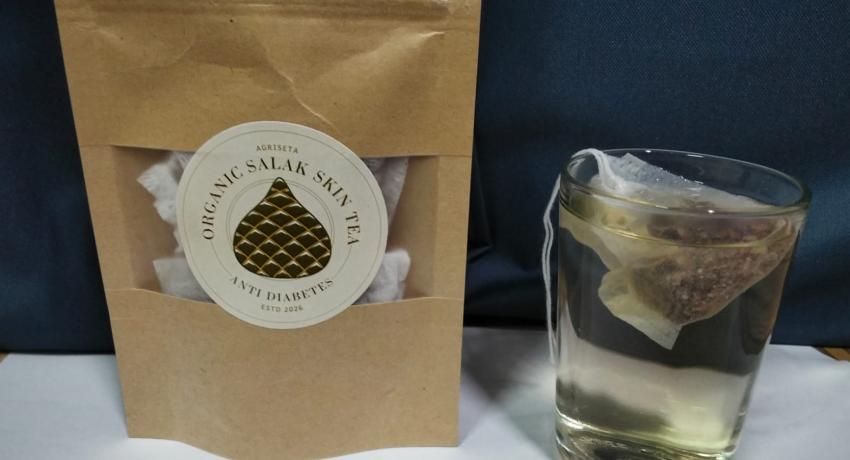
During the training, the students introduced the potential use of salak peels, which are often regarded as waste and simply discarded. In fact, salak peels contain flavonoids, tannins, antioxidants, and natural fiber that may provide health benefits, including helping maintain blood sugar levels and digestive health. Through this educational activity, residents learned simple methods of processing salak peels into herbal drinks that could potentially be developed into household products with commercial value.
Participants were taught the process of making salak peel herbal drinks, starting from washing and cutting the peels, drying them under sunlight, and brewing them to produce optimal flavor. The students also introduced flavor variations such as ginger, cinnamon, lemongrass, honey, and lemon to make the product more attractive to consumers.
In addition to the main training on salak peel herbal drinks, the students also introduced another innovation called salak gummy as an alternative processed salak-based product. This innovation is expected to expand opportunities for diversifying processed salak products in the community so that harvests are not only consumed directly but also gain higher economic value.
The head of the PLK group, Nabila Ilma Yenisa, explained that the activity aimed to broaden public understanding regarding the more comprehensive utilization of salak fruit, including its peel, which has not been optimally used.
“We want to show that salak peels, which are usually considered waste, actually have great potential to be processed into useful and economically valuable products. We hope residents can develop this innovation as a business opportunity while also reducing agricultural waste,” said Nabila.
Meanwhile, the Head of Watuadeg Hamlet, Eko Sutrisno, expressed his appreciation for the contribution of UNY PLK students in providing education to the community. According to him, the activity was highly relevant to the area, which has strong salak farming potential.
“We warmly welcome this activity because it provides practical knowledge to residents about utilizing local potential more creatively. Hopefully, the knowledge shared by UNY students can be applied and provide economic benefits for the community,” said Eko.
Through this activity, UNY PLK students hope the people of Watuadeg will become more innovative in utilizing local agricultural products, not only the salak fruit itself but also its peel waste, which has the potential to become a featured local food-based product. The program also represents the students’ contribution toward community empowerment and strengthening the village economy.
The salak peel tea processing training program also supports the achievement of the Sustainable Development Goals (SDGs), particularly SDG 3 (Good Health and Well-Being), SDG 8 (Decent Work and Economic Growth), SDG 12 (Responsible Consumption and Production), and SDG 17 (Partnerships for the Goals), through innovation in utilizing local potential, reducing agricultural waste, and community empowerment based on collaboration.