



Accurate knowledge about HIV and AIDS is important not only for maintaining health, but also as a first step toward ending stigma and discrimination against people living with HIV (PLHIV). This was the message delivered by Universitas Negeri Yogyakarta (UNY) students taking part in the Educational Practice (PK) program through a health education session for students of SMK Negeri 1 Wonosari, Gunungkidul Regency.
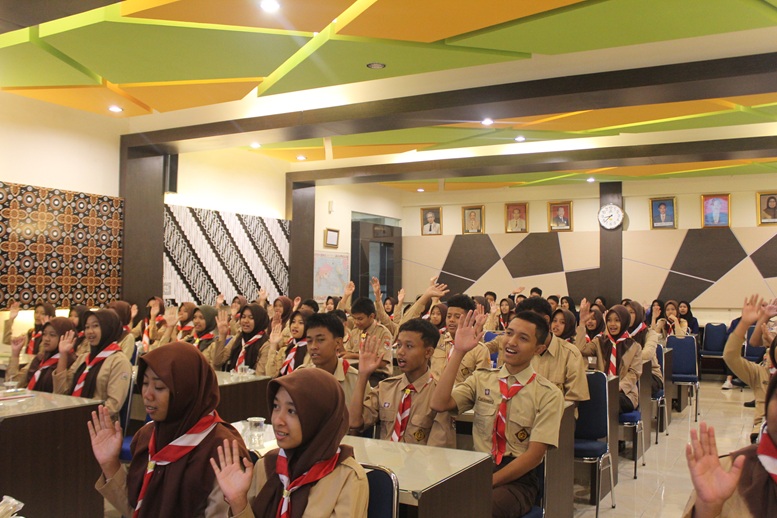
In collaboration with Wonosari I Community Health Center (Puskesmas), UNY Educational Practice students for the 2026/2027 academic year recently held an outreach session themed “Increasing Adolescents’ Knowledge about HIV and AIDS.” A total of 78 tenth-grade students took part in the activity, which was designed to provide a better understanding of HIV and AIDS while correcting misinformation that continues to circulate in society.
The activity formed part of efforts to support the Sustainable Development Goals (SDGs), particularly SDG 3 on Good Health and Well-Being. The education session focused not only on health knowledge, but also on encouraging young people to become more caring and empathetic and to reject discrimination against people living with HIV.
A number of myths surrounding HIV transmission continue to cause fear and discriminatory treatment. Shaking hands, hugging, sharing eating utensils, and mosquito bites, for example, are sometimes mistakenly believed to transmit HIV. Such misconceptions underline the importance of providing young people with fact-based health information.
The session was delivered by Tri Resmiyati, S.Tr.Keb., a health professional from Wonosari I Community Health Center. The material was presented in a communicative and interactive manner to make it easier for students to understand.
Students received explanations about HIV and AIDS, the distinction between HIV as a virus and AIDS as a condition in which the immune system has become severely weakened, modes of transmission, early signs and symptoms, the importance of HIV testing, antiretroviral (ARV) treatment, and various preventive measures.
To make the learning process more interactive, participants also took part in a “Myth or Fact” game and case-study discussions. Through these activities, students were challenged to distinguish accurate information from misconceptions while developing a more critical approach to information about HIV and AIDS.
The importance of eliminating stigma was one of the key messages emphasized during the activity. Tri Resmiyati stressed that society needs to distinguish between risky behavior and individuals living with HIV. “What should be avoided is risky behavior, not the person. People living with HIV still have the right to study, work, and socialize without discrimination,” she said.
The message served as a reminder that HIV and AIDS education goes beyond preventing transmission. Accurate knowledge is also essential for building a safe and inclusive social environment for everyone.
Participants showed strong enthusiasm throughout the activity. Through the education session, students are expected to develop an understanding of HIV and AIDS based on scientific information, adopt healthy behaviors, and become less susceptible to misinformation.
Beyond that, the knowledge gained is expected to be shared with peers, family members, and the wider community. In this way, students can become not only recipients of information, but also agents of health education within their communities.
The collaboration among UNY Educational Practice students, Wonosari I Community Health Center, and SMK Negeri 1 Wonosari demonstrates how health education can provide a shared platform for fostering a healthier younger generation with greater social awareness.
Through sustained initiatives, reproductive health education is expected to reach more adolescents across Gunungkidul Regency. With accurate knowledge, young people are expected to become better equipped to protect their own health, respect the rights of people living with HIV, and help create an environment free from stigma and discrimination.