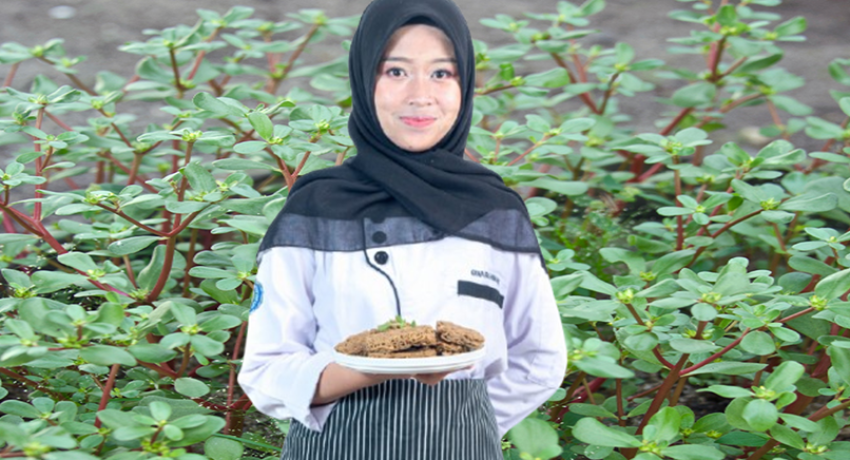



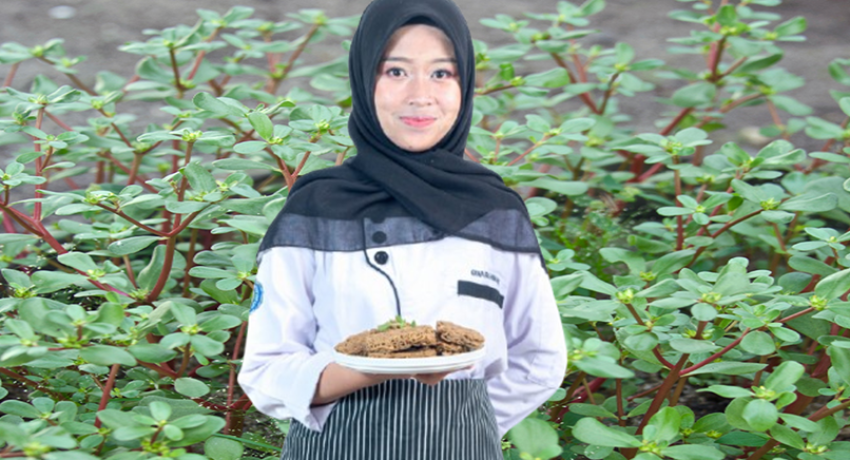
Innovation in local food-based culinary products continues to emerge from Universitas Negeri Yogyakarta (UNY). Gina Rahmah Maulidiyah, a student of the Applied Bachelor’s (D4) Culinary Arts Program at the UNY Faculty of Vocational Studies, has developed a unique noodle product made from purslane leaves, named “Mikrot.”
Mikrot is a crispy noodle innovation that incorporates purslane flour as a substitute ingredient in the dough. The product adapts a Chinese-origin dish that has spread across various parts of Asia, including Southeast Asia, Japan, and Korea. It uses a cooking technique involving steaming followed by deep frying to achieve a distinctive crunchy texture.
Gina explained that the selection of purslane leaves was based on both flavor and nutritional value. “There are several considerations behind choosing purslane as a substitute ingredient, especially its functional benefits. Nutritionally, purslane contains high levels of bioactive compounds such as omega-3 fatty acids (alpha-linolenic acid), vitamin A, vitamin C, as well as antioxidants like flavonoids and betalains,” she stated on Wednesday (May 6, 2026).
Originally from Bona Lumban, Tukka District, North Sumatra, Gina added that these nutritional components provide additional health benefits, including antioxidant activity and improved immune system support.
Beyond its nutritional value, Gina also highlighted the abundance and accessibility of purslane as a key factor. Despite its availability, purslane is often overlooked and considered a wild plant or weed, limiting its utilization in the food industry.
“The use of purslane is supported by its abundance, yet it remains underutilized. Through this innovation, I aim to increase its added value while promoting sustainability. I hope people can see plants not only by their label but also understand their function and benefits for health and the environment,” she explained.
The Mikrot innovation demonstrates the role of vocational students in delivering creative solutions based on local potential. In addition to opening opportunities for new culinary product development, the initiative promotes the utilization of underused biological resources into economically valuable products.
This innovation also aligns with the Sustainable Development Goals (SDGs), particularly SDG 2 (Zero Hunger) through food diversification, SDG 3 (Good Health and Well-being) through the use of nutritious ingredients, and SDG 12 (Responsible Consumption and Production) through sustainable utilization of local resources.